


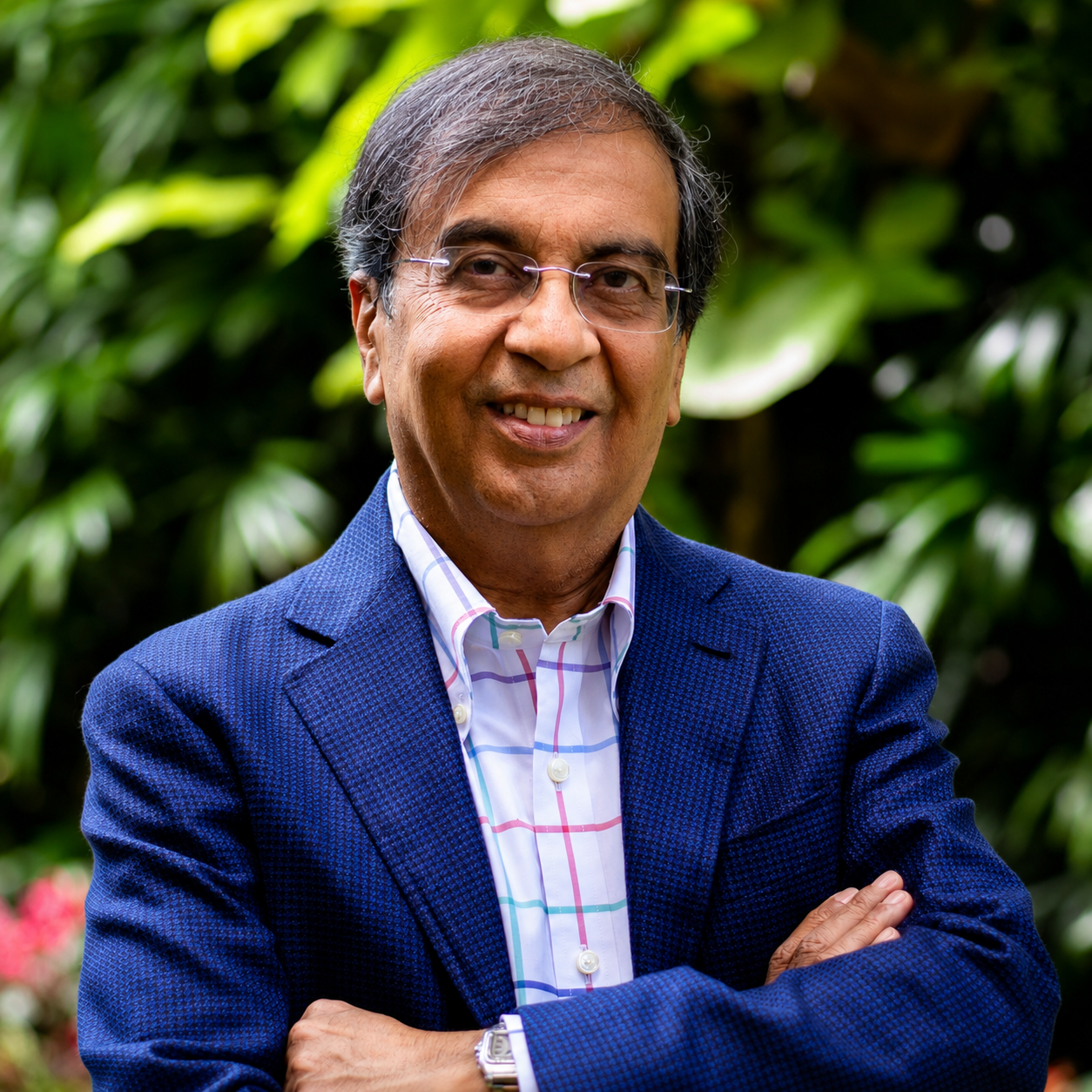
The Art of the Long Game: How Chander K. Baljee Weathered 35 Years of Storms to Build a Hospitality Empire
There is a quiet, almost startling calm to Chander K. Baljee. When the Chairman and Managing Director of Royal Orchid Hotels narrates his life story, he speaks in a detached, third-person tone—as if recounting the adventures and misadventures of someone else entirely.
But look closer, and you realize this isn’t detachment; it is the ultimate business superpower. It is the hard-won stoicism of a man who spent 50 grueling years in the trenches of the Indian hospitality industry, facing every conceivable crisis, only to emerge at the helm of a ₹900-crore hotel empire spanning 120+ hotels and 7,600+ keys.
In an era of instant gratification and overnight tech unicorns, Mr. Baljee’s journey is a powerful, inspiring reminder of a forgotten truth: the greatest empires are built on the slow-burning fire of pure resilience.
Stepping Out of the Comfort Zone
To understand Chander Baljee, you have to understand where he came from. Anyone who has ever travelled to the mist-covered hills of Shimla has likely eaten at Baljee’s, the hill station’s most iconic and celebrated restaurant and hotel. His own entrepreneurial streak showed early: directly above Baljee’s on Mall Road, Mr. Baljee started Fascination, which he grew into one of Shimla’s most beloved culinary landmarks and a legendary social hub through its golden age in the 1970s.
Born and brought up in this comfortable cocoon, Mr. Baljee went on to earn a B.Com in Delhi and a coveted MBA from IIM Ahmedabad.
He had a golden ticket. He could have easily stepped into the family business and lived a life of predictable luxury. But within months of joining, the young graduate felt crowded. With his father and brother already managing the show, he realized that true growth lay in carving his own path.
Taking a leap of faith, he packed his bags and moved from the cool mountains of the north to the Deccan plateau down south. The year was 1973. The destination was Bangalore—not yet the roaring Silicon Valley of India, but a sleepy “pensioner’s paradise” populated mostly by public sector undertakings and very few business travellers.
With a ₹5 lakh lease deposit funded by his family, he took over a struggling property, refurbished it, and launched his first hotel: The Harsha.
When Bad Luck Comes in Waves
If business plans were written on paper, Mr. Baljee’s spreadsheet would have predicted smooth sailing. But reality had other ideas. For the next two decades, the universe tested his resolve not once, not twice, but repeatedly.
In 1985, just as he was about to file a prospectus for an Initial Public Offering (IPO) to fund massive expansion plans, the stock market crashed. The IPO was instantly frozen.
Then came the late ’80s a period that would have broken most entrepreneurs. Due to lease disputes, his profitable side-restaurants closed down. In 1987, his hotel staff went on strike, bringing daily operations to a grinding halt. Facing a brutal cash crunch, he was forced to sell off his beloved bakery unit just to stay afloat. A year later, the lease on The Harsha expired, leaving him with a stark choice: buy the property by taking on massive bank debt, or walk away from everything he had built.
He chose to fight.
The Billion-Dollar Lesson in Credibility
Between 1987 and 1999, Mr. Baljee’s life became a masterclass in financial survival. He found himself locked in a grueling, seven-year legal battle over a prime piece of land near the Bangalore airport. When construction finally began in 1999, it was an ambitious project funded almost entirely by borrowing.
“I had no choice but to borrow, borrow, and borrow more,” Mr. Baljee muses with a smile.
How does an entrepreneur under that much financial pressure sleep at night? For Mr. Baljee, the answer was rooted in an unshakeable moral compass.
“One thing I have always believed is that whatever you do, you do in a very honest manner,” he says. “I never ever defaulted on any financial institution payment or salaries to employees.”
This flawless integrity became his greatest asset. Because the banking sector knew that Chander K. Baljee’s word was gold, they backed him. He raised ₹17–18 crores in debt at low interest rates based on nothing but his impeccable reputation.
“This Too Shall Pass”
In 2001, the crowning jewel of his career, the Royal Orchid Hotel, finally opened its doors. It was supposed to be a moment of triumph. Instead, weeks later, the world changed forever.
The September 11 terrorist attacks shook global aviation, followed shortly by the SARS outbreak. Global business travel plummeted to zero. Occupancy rates crashed. With two sons studying abroad and massive corporate debts to pay, Mr. Baljee was in the eye of the storm.
Where others would have succumbed to panic or bitterness, Mr. Baljee leaned into his signature optimism. “When you are in a soup, you have to continue to be in a bigger soup… you can’t do anything more,” he chuckles. He trimmed costs, managed money with laser precision, and waited. He knew the golden rule of the universe: This too shall pass.
And pass it did.
The Sweet Taste of Triumph
By 2003, the tide finally turned. The Indian economy boomed, and Bangalore transformed into a global tech hub. Suddenly, Royal Orchid was the hottest property in town.
In a beautiful poetic twist, the legendary Hotel Metropole—the exact property that had originally lured him from Shimla to Karnataka thirty years prior—came up for lease again. This time, a triumphant and established Chander Baljee won the contract.
By 2006, the IPO that had been put on ice in 1985 finally became a reality. Royal Orchid raised ₹130 crores, expanding aggressively to Jaipur, Hyderabad, and Pune using a smart, asset-light leasing strategy. They successfully went head-to-head with legendary hospitality giants like the Taj Group by offering a genius value proposition: 5-star luxury at value-for-money prices.
By March 2007, revenues skyrocketed to ₹125 crores, with a staggering profit after tax of ₹35 crores.
Passing the Torch
Today, Royal Orchid is a thoroughly professionalized national chain. And true to his pragmatic nature, Mr. Baljee is already planning the future for his two brilliant sons, Arjun (a Cornell hotel graduate) and Keshav (a Wharton and ISB alumnus).
Ever the realist, he acknowledges that family businesses often face internal friction. His solution? To separate ownership from daily operations, letting professional corporate executives run the core brand, while giving his sons the runway to build their own independent dreams—such as Arjun’s new budget hotel chain, Peppermint.
The Ultimate Takeaway
The tastefully furnished, bustling lobby of the Royal Orchid in Bangalore stands today as a monument to one man’s patience. It took Chander K. Baljee 35 years to become an “overnight success.”
His story is a beautiful blueprint for anyone building a dream today. It tells us that real success isn’t about avoiding the market crashes, the strikes, or the global crises. It is about having the financial discipline to keep your honor intact, the humility to laugh when you’re in the “soup,” and the sheer psychological grit to just keep standing until the storm runs out of rain.


Leave a Reply